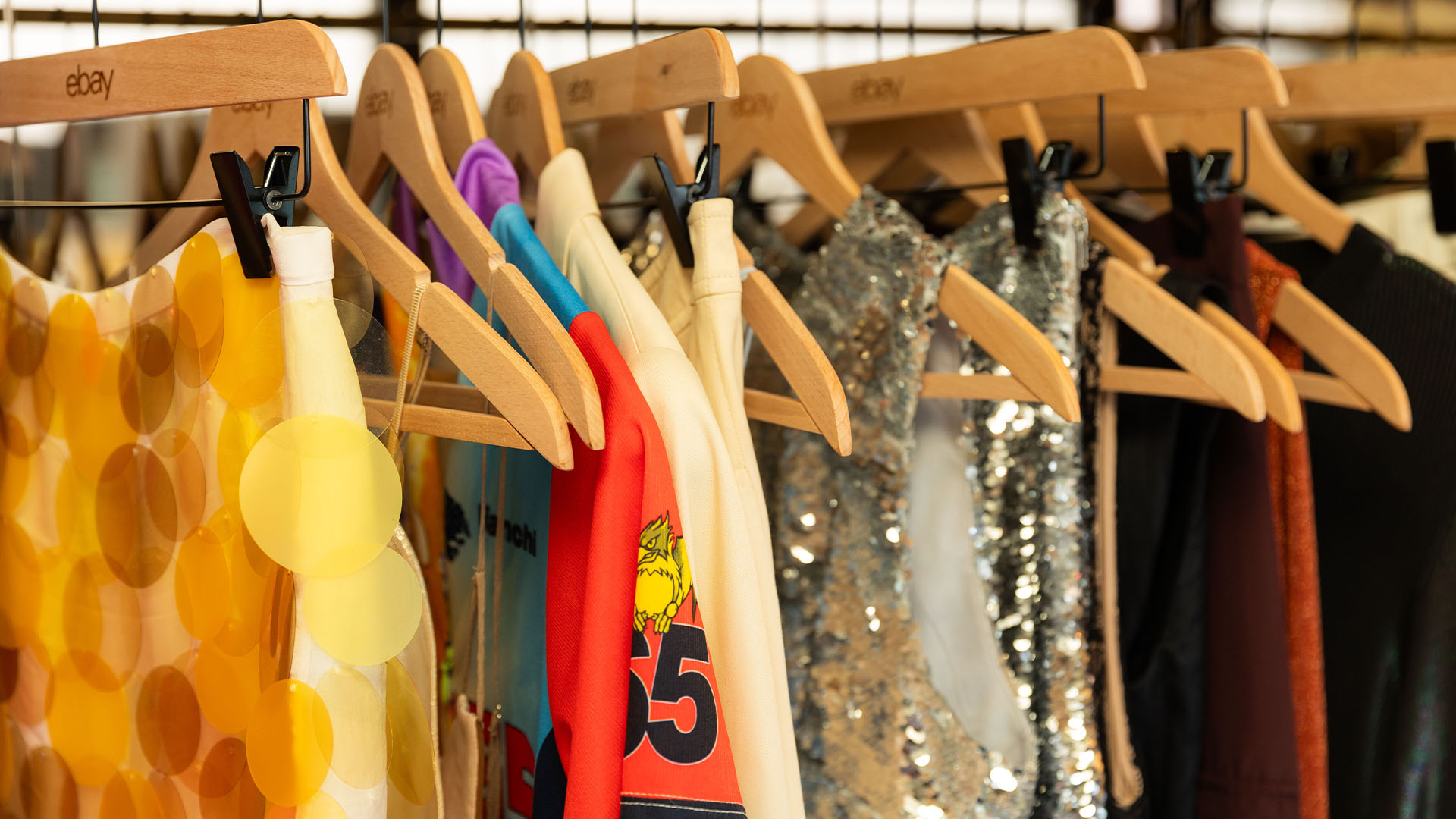
Pre-loved and repair displaces sales of new clothing
New research has revealed that pre-loved businesses are displacing sales of new clothing, with the average displacement rate for repair at 82.2% and resale at 64.6%, according to global environmental action NGO WRAP.


A report from WRAP, working with resale and repair businesses, shows the positive impacts that a range of circular business models are having in stopping the purchase of new clothes.
Working with Depop, eBay, Vestiaire Collective, The Seam, SOJO and Finisterre, the research calculated the extent to which the rise of repair and resale can displace new sales, and how much they help offset the environmental cost of clothing.


Justine Porterie, Director of Sustainability & DEI at Depop, said: "At Depop, we're on mission to make fashion circular. We believe in the power of resale to offer a credible and less impactful alternative to shopping new - and are keen to prove it with data.
"We've been on a journey to measure our impact for some years now, and that's why we welcome an industry aligned methodology for calculating the displacement rate. Collaboration is crucial to reinforce the case for new circular fashion businesses and pave the way for an industry built on circular principles."


Layla Sargent, founder and CEO of The Seam, added: "Clothing repair has the potential to turn worn out pieces into wearable, desirable fashion. This research demonstrates just how much our customers truly love their clothes, along with the potential for the fashion industry to enable people to make their clothing last."
The data found that for every five times people repair existing items of clothing, four new items of clothing are ‘displaced’ by people no longer buying them. In addition, for every five items bought second-hand online, three new items are subsequently not bought on average, as a result.


Other findings include:
- Buying a second-hand pair of jeans online instead of buying a new pair could save over 30kg CO2e, equivalent to making 600 cups of tea.
- Buying a second-hand pair of trainers online instead of buying a new pair could save over 12kg CO2e, equivalent to streaming on-demand TV for almost 10 days.
- Repairing one cotton t-shirt instead of buying a new one could save over 7.5kg CO2e, equivalent to ironing for 25 hours.
- Repairing a hole in a wool jumper instead of buying a new one could save over 16kg CO2e, equivalent to leaving a standard (60W) lightbulb on for over 50 days.
- Repairing a rip in your waterproof jacket instead of buying a new one could save over 45kg CO2e, equivalent to running almost 300 washing cycles.
Based on this nationwide research, WRAP has established clear benchmarks for repair and resale, developing a single methodology that can be applied by businesses to give robust and comparable data. It is now calling on companies to adopt this new standardised way to measure resale and repair.
Harriet Lamb, Chief Executive Officer at WRAP, said: "Our research shows that buying preloved both satisfies our desire for clothes, for something new-to-us, and means we don’t buy so many brand-new items.
"What’s more, we can now clearly and consistently measure the environmental case for a range of circular business models including repair - for the first time. I encourage companies to adopt this new technique – customers are looking to them for new services like repair and renting."