
From business rates to consumer confidence: What the Autumn Budget means for retail
Chancellor John Healey’s first Budget offers targeted relief to the retail, hospitality and leisure sectors, including the removal of an additional 70,000 businesses from business rates. Larger retailers will also benefit from a two-year real-terms freeze on business rates bills, following calls for support over rising business rates and employment costs. While the measures aim to ease mounting cost pressures across the sector to some extent, opposition parties and business groups have called for further support.


Healey told MPs that the UK was facing “global economic storms”, with the war in Iran driving oil prices from around $70 to more than $100 a barrel and gas prices nearly tripling since February. Against this backdrop, the Office for Budget Responsibility (OBR) has downgraded its forecast for GDP growth in 2027 to 1.0%, from 1.6% in March, while the Government is expected to spend an additional £14 billion on debt interest this year.
“Those are the storms we face. We cannot wish them away. We must choose the course we steer through them,” the Chancellor said.
Healey set out three priorities for the Government: easing the cost-of-living pressures facing households and businesses; supporting British enterprise to drive innovation and growth across the country; and addressing major challenges in energy, national security, public sector procurement and reform, and housing.
As part of his Budget speech, the Chancellor announced plans to raise the small business rates relief threshold for retail, hospitality and leisure premises in England from £12,000 to £18,000.
“That means 70,000 more businesses. I’m not just cutting their rates, I’m taking them out of paying business rates altogether. That means half of our shops, restaurants and gyms pay no business rates at all,” Healey said.
All other properties in those sectors will have their rates frozen in real terms, meaning they will not face above-inflation increases over the next two years. The package sits alongside the 20% rates cut for pubs and live music venues announced in July, which takes effect from April 2027. Business rates are devolved, so Scotland, Wales and Northern Ireland will receive funding that they can use for equivalent measures if they choose.
“Since day one I’ve said that I’ll be a Chancellor who champions the small British firms that give character to our communities. The bakeries, the cafes, the hair salons,” Healey said.
He also confirmed that 100% of business rates will be retained locally by the end of the decade, with 20% of revenues going to mayors from next year.
To fund the measures, gambling businesses, vape shops and online sellers will face additional costs. Machine games duty on higher-stakes machines will rise from 20% to 25%, with pubs and seaside arcades protected. Adult gaming centres and vape shops will lose eligibility for business rates relief, while the transitional relief supplement will be extended for a further two years.
From October 2027, online marketplaces will also have to collect VAT when UK businesses make qualifying sales through their platforms. The Treasury said the measure targets tax evasion that undercuts compliant high street and online businesses. It follows the Government’s decision in June to bring forward the removal of low-value customs duty relief to October 2028.
Helen Dickinson, Chief Executive of the British Retail Consortium (BRC), welcomed the removal of 70,000 small high street businesses from business rates but warned that rising bills would leave retailers with less money to invest in jobs and stores, and to keep prices down.
She described the announcement as “a smoke and mirrors announcement on business rates”. “The Chancellor’s headline announcement that he will ‘freeze [retail, hospitality and leisure] rates in real terms’ means a 3.5% increase - another body blow to high streets already struggling with rising costs and empty units,” she said. The BRC estimates that the increase will add around £250 million to retailers’ business rates bills next April.
Dickinson argued that the measures offer limited direct relief to larger retail chains, many of which had been among the most vocal in calling for support ahead of the Budget. Earlier this month, John Lewis Partnership chair Jason Tarry said the business pays around £170 million a year in business rates, with more than 200 John Lewis and Waitrose stores affected by the higher charges.
“Major department stores and supermarkets, including our 36 John Lewis stores and hundreds of Waitrose branches, act as vital anchor tenants,” Tarry previously wrote. “They generate the primary footfall that sustains surrounding independent shops, pubs, bakeries and cafes. Penalising anchor retailers through higher business rates risks harming the smaller businesses operating in their orbit.”
Matt Dalton, Retail Sector Lead at Forvis Mazars, said the Government “must be careful not to overlook larger retailers, which are major employers and investors in our town centres. Reforms that leave them facing disproportionate costs risk undermining the very high streets the Chancellor is trying to support.”
“Ultimately, retailers make investment and hiring decisions based on the cumulative cost of doing business, not individual tax measures,” he added. “While today’s announcement is a positive step, broader reform of the business rates system will be essential to give retailers of all sizes the confidence to invest, recruit and grow.”
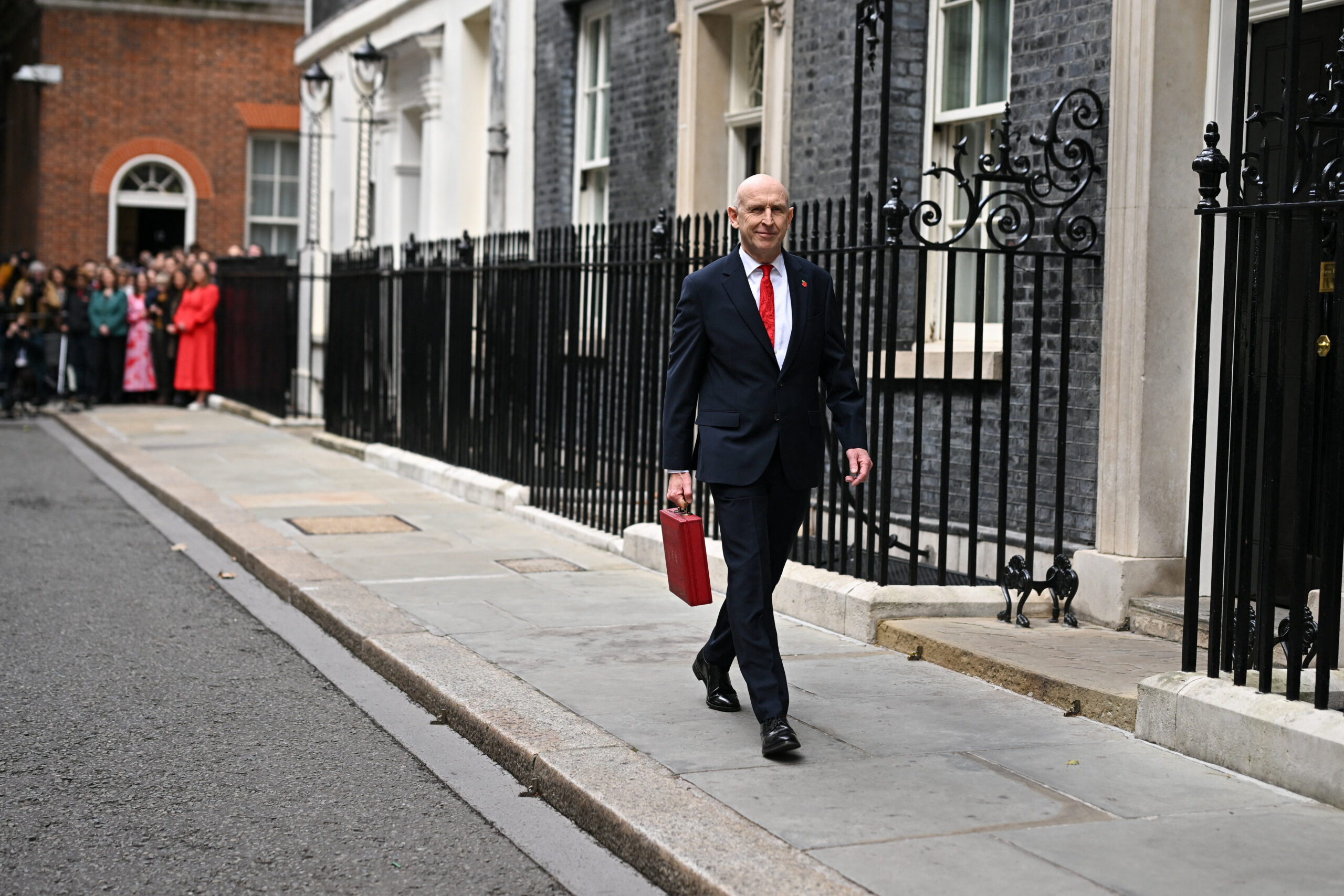
Chancellor of the Exchequer John Healey leaves 11 Downing Street, London, with his ministerial red box, before delivering his first Budget to the Houses of Parliament.
Elsewhere in the Budget, measures aimed at household bills and the cost of living are intended to support consumer confidence.
The £100 energy payment will go to around 20 million households in council tax bands A to D in England, with the money paid directly into bank accounts. The £2.6 billion scheme will be funded partly by a temporary increase in the bank corporation tax surcharge from 3% to 6% for 15 months from January, which the Treasury expects to raise £1.5 billion.
Other measures aimed at household budgets include:
- Extending the VAT cut on household electricity to 1 July 2027, which the Treasury estimates will reduce the annual price cap by around £50.
- Asking Ofgem to remove gas standing charges, which cost a typical household around £108 a year, and shift fixed costs onto the unit rate. The Treasury said 60% of households could save an average of £45 a year.
- Extending the 5p fuel duty cut until July.
- Suspending tariffs on more than 100 supermarket products.
- Introducing a new pension tax allowance so that pensioners with incomes up to the value of the full new state pension pay no income tax.
Against this, tax on income from savings and property will rise by a further two percentage points from April 2027.
Linda Ellett, Head of Consumer, Retail & Leisure at KPMG UK, said: “While measures to ease and control energy and cost of living pressures are welcome and hopefully aid consumer confidence, with a number of essential costs elevated or still rising, consumer spending is likely to continue to be impacted into 2027.
“Despite what’s been announced in the Budget, businesses are going to have to continue to battle for available share of wallet and from customers that are increasingly waiting for promotions or discounts for target products. As with households, businesses are also facing pressure from higher overheads. Those no longer required to pay business rates will therefore welcome the easing of this burden, while others will benefit from rates relief or a freeze on rates.
“Competitiveness remains key and companies will continue to seek out efficiencies where they can, while looking to the Government to also provide the right conditions for growth.”
This comes as shoppers entered the Budget period in a pessimistic mood. The BRC-Opinium survey for October found that expectations for the economy fell from -34 to -40, while expectations for personal finances declined from -15 to -18. Expected retail spending rose from +5 to +15 as the festive period entered the survey’s three-month window. Separate polling found that 82% of adults were concerned about inflation.
UK footfall fell by 2.9% year-on-year in September and by 3.0% on high streets. BDO recorded a 0.3% fall in like-for-like discretionary sales, the weakest September since 2019, excluding the pandemic.
Before the Budget, Dickinson said: “Retailers have been doing everything they can to limit price rises, but with the industry now paying 20% more in taxes than two years ago, there is no more room for manoeuvre. Government must act on the tsunami of costs that have hit the industry, from employer National Insurance Contributions to business rates. A little breathing room for retailers at the Budget can mean a lot of breathing room for households.”
Healey did not announce a change to employer National Insurance. Dickinson said the wage increase and lack of a reduction in employer contributions would add further pressure on retail jobs.
The National Living Wage will rise by 3.9% to £13.21 an hour from 1 April 2027, alongside an equivalent increase in the National Minimum Wage. The changes will affect 2.3 million of the lowest-paid workers. The Treasury estimates that the increase will add £910 to the gross annual pay of a full-time worker on the rate.
Chris Brook-Carter, Chief Executive of the Retail Trust, said: “The increase in the minimum wage will make a real difference to workers struggling with the cost of living, but we also need to ensure retailers can afford to maintain staffing levels, create new jobs and invest in their people. This is particularly important for young people, many of whom get their first experience of employment in retail.
“Supporting our high streets must also mean supporting the people who keep them running. We need to ensure a retail industry where employees can feel more secure in their jobs, safer at work and better supported when they need help.”
Energy relief will also largely bypass the retail sector. The BRC had called for support schemes to cover retail and its supply chain, describing the industry as the UK’s third-largest energy user, with around 90% of its energy now coming from electricity. The new British Industrial Competitiveness Scheme will cut electricity bills by up to 25% from April for more than 10,000 businesses. However, eligibility is limited to businesses in Industrial Strategy sectors with high electricity use and qualifying foundational sectors in their supply chains.
"While households will welcome action on domestic energy bills, and businesses will welcome the future de-linking of gas and electricity prices, the Budget fell short of what retail businesses need," added Dickinson. "The Chancellor should have gone further to extend the British Industrial Competitiveness Scheme to retail and its supply chain."
On investment, the lifetime limit for business asset disposal relief will be halved from £1 million to £500,000. The trading allowance will triple from £1,000 to £3,000 to support people starting a business, while a new Founders Relief will offer a 10% capital gains tax rate on up to £10 million of lifetime gains. The National Wealth Fund and British Business Bank will receive a further £20.4 billion.
In response to the Budget, Conservative Leader Kemi Badenoch criticised the Budget’s business measures, saying there was “nothing for business here”.
“[The Chancellor] says he is helping with the cost of doing business. Businesses need cheaper energy, flexible labour markets, and lower taxes. They are getting none of those. Nearly half of businesses say they cut employment because of Labour’s jobs tax. There are now fewer vacancies in the economy than at any point in the last 12 years outside the pandemic.”
She also said business confidence had been negative for seven consecutive quarters.