

Burberry has a new CEO but its creative director deserves more time
There has been a rapid change of broom at Burberry with Jonathan Akeroyd out and Joshua Schulman (formerly of Michael Kors) in as its new CEO.


After just over two years, Akeroyd has become for the fall guy for lower sales, falling over 20%, and the axing of the company dividend. The luxury global downturn, specifically in China, has hit Burberry hard with over 40% of its sales coming from the APAC region.
The idea – a strategy founded under previous management –was to take the brand upmarket, which to most looked like just putting up the prices.


Former CEO Marco Gobbetti, alongside designer Riccardo Tisci, spent five years prior to Akeroyd’s arrival attempting to take Burberry upwards in the luxury landscape, while at the same time overseeing the ‘re-blanding’ of the brand. This saw it turn its back on Britishness (Akeroyd had been at pains to reverse this) and the iconic trench coat, its perennial cash cow.
Gobbetti subsequently moved onto Ferragamo where he has overseen a near 20% decline in its revenues in its most recent financial reporting.


Joshua Schulman, new CEO at Burberry
Burberry has been losing brand momentum since creative chief (and later also CEO) Christopher Bailey left in 2018. Bailey, along with successive CEOs Rose Marie Bravo and Angela Ahrendts, transformed Burberry into Britain’s only luxury player. To say the brand wasn’t elevating then is wrong. Bailey introduced the premium Prorsum collection offering trend-led with luxury. It had an alligator trench coat retailing for £79,000 in 2017.
New CEO, Schulman has worked in the fashion industry for more than 33 years, including at least 24 in executive positions, according to his LinkedIn profile. He was most recently CEO of Michael Kors and has previous experience at Coach and Jimmy Choo.


On the announcement of his appointment, the Burberry brand statement read: “Against a backdrop of slowing luxury demand across all key regions, our immediate focus is on rebalancing our product offer to include a broader everyday luxury offer and a more complete assortment across key categories.”
Read this as the end of Burberry’s very wishful aspirations to become a HNWI true luxury brand. There is nothing wrong with staying at the position it was/is in. Though, arguably it shouldn’t go as affordable and mall-based as Coach or Michael Kors.
And this take us to the product and image, now overseen by British designer Daniel Lee. Lee, who joined from Bottega Veneta, has reinstated a Britishness to Burberry with the familiar Yorkshire roots of Bailey. His third collection, FW24 will be hitting shops imminently.

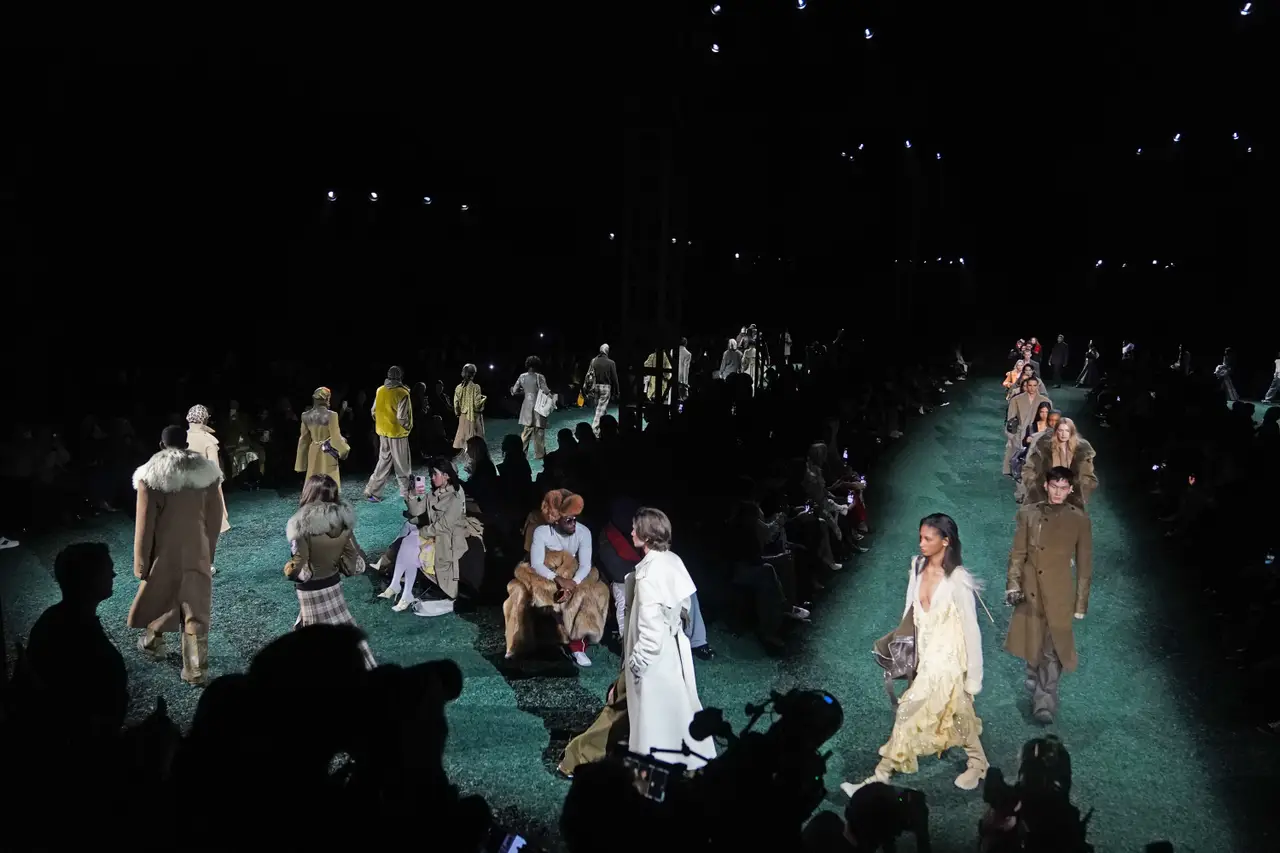
Models on the catwalk during the Burberry show in Victoria Park, east London, during London Fashion Week, February 2024 (PA)
It is still early days, but he has already made an impact on accessorises with much more variety and design quality in handbags, which is one of the reasons he was so successful at Bottega Veneta. The most recently launched Rocking Horse bag is head and shoulders above the Olympia launched under Tisci, with comparable price points.
Burberry has moved from a brand that felt predictable to one that feels more experimental under Lee. The return of the Burberry knight (the brand insignia resurrected by Lee) has also stamped a heritage mark on the advertising and stores.
Schulman will no doubt want more commercial product, but it would be better to stretch the price points down while keeping the upper tier to create the aspirational halo. Lee can keep trying to introduce a hit ‘It’ bag like the Cassette he introduced at Bottega Veneta. The question is whether Lee will stay under new management.

The Burberry Rocking Horse Bag introduced by Daniel Lee
There is a balance to be had here, and unlike previous Burberry incarnations, it should be about moving on, not just chucking everything old out.
Shareholders mostly care about a dividend and the share price. The luxury fashion industry faces serious headwinds at the moment. Burberry is a heritage brand and has lost older consumers who don’t or don’t want to understand the current ugly and directional fashions being produced. They are also baulking at the prices that have risen far beyond inflation. But, they could possibly stump-up for a £2,000 trench coat if it is marketed as an investment piece rather than disposable fashion.
Schulman’s connections to Tapestry, owner of Coach, and Capri Holdings, owner of Michael Kors and Jimmy Choo, could see a takeover if the share price remains low, or a possible poaching of staff. British designer Stuart Vevers (formerly of Loewe and Mulberry) is successfully heading up Coach and could potentially be tempted to return home to lead the creative vision at Burberry, which shareholders would likely welcome. There was a proposed merger between the two American fashion conglomerates, Tapestry and Capri Holdings, which was blocked by American courts.
Gerry Murphy, Chair of Burberry, said of the decision to replace the CEO: “We moved quickly with our creative transition in a luxury market that is proving more challenging than expected. We are taking decisive action to rebalance our offer to be more familiar to Burberry’s core customers whilst delivering relevant newness. We expect the actions we are taking, including cost savings, to start to deliver an improvement in our second half and to strengthen our competitive position and underpin long-term growth.”

Burberry's Daniel Lee
Those cost savings could result in hundreds of job losses if recent press reports are correct.
Schulman, however, needs to give Lee more time. His third collection is only just arriving in-stores and the landscape for decent fashion creative directors is pretty thin right now. Burberry could position itself somewhere between Loewe and Mulberry, reinstalling heritage with a contemporary edge while leaning into all its UK-made product which still includes the coats and scarves.
If it could add a hit bag, which seems increasingly elusive for all luxury brands, it could be riding as high as its forward looking knight.
Main image: Burberry London Fashion Week February 2024 (James Manning/PA).


